
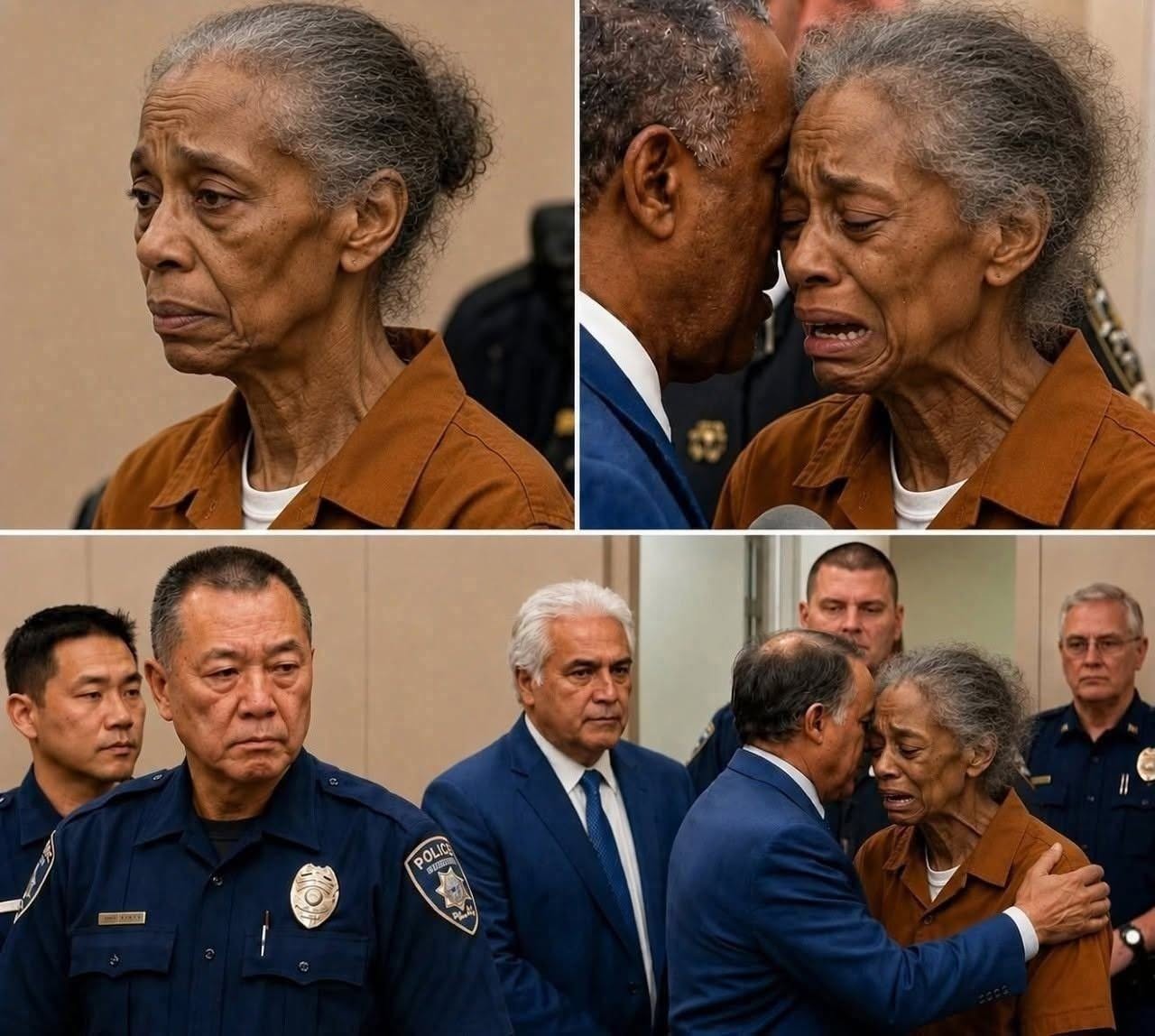
😱 “Old Woman Sentenced to 150 Years in Prison After She Ra…” — What Really Happened?
A headline such as “Old Woman Sentenced to 150 Years in Prison After She Ra…” is almost impossible to scroll past.
It immediately raises questions.
Who was she? What could possibly have happened to result in a sentence of 150 years? Was the woman actually elderly? Was the sentence really 150 years, or is the headline leaving out an important detail?
These questions matter because dramatic crime headlines circulating online are sometimes shortened, rewritten, or stripped of context to encourage readers to click.
There are, in fact, documented cases involving extraordinarily long prison sentences, but the details are often very different from what a sensational headline initially suggests.
One particularly important case involved Aariel Maynor, who was sentenced in California in 2022 to 150 years to life for the killing of 81-year-old philanthropist Jacqueline Avant. The person receiving the sentence was not an old woman; Maynor was a young man.
L
Los Angeles Times
+1
That distinction illustrates why readers should slow down before sharing a dramatic headline.
The case of Jacqueline Avant
Jacqueline Avant was a highly respected philanthropist and community leader who was 81 years old when she was killed at her Beverly Hills home on December 1, 2021.
She was also the wife of legendary music executive Clarence Avant, a prominent figure in the American entertainment industry.
According to prosecutors and court records reported by the Los Angeles Times, Maynor entered the couple's home during a burglary. Avant confronted him, and he fatally shot her. As he fled, he also fired several shots toward an unarmed security guard, although the guard was not injured.
L
Los Angeles Times
The crime shocked the community.
Avant was not simply known as the wife of a famous music executive. She had spent years involved in community and philanthropic work, including serving as president of the Neighborhood of Watts, a support organization connected with child care in South Los Angeles.
L
Los Angeles Times
Her death therefore affected not only her immediate family but also many people who knew her through decades of community involvement.
Who was sentenced to 150 years?
The person sentenced was Aariel Maynor, not Jacqueline Avant and not an elderly woman.
According to reporting from the Los Angeles Times, Maynor was 29 at the time of sentencing and had a criminal history that included previous robbery convictions. He had been released from state prison only a few months before Avant's killing.
L
Los Angeles Times
He ultimately pleaded guilty to several charges, including:
Premeditated murder
Attempted murder
Being a felon in possession of a firearm
Two counts of residential burglary
The court imposed a sentence of 150 years to life for the murder, along with an additional consecutive term for other crimes. The Los Angeles Times reported the total sentence as more than 150 years, while other reports described the practical result as multiple life-equivalent terms.
L
Los Angeles Times
+1
So if you encountered a social-media headline describing an "old woman sentenced to 150 years," it is important not to confuse that headline with this documented case.
Why was the sentence so long?
A sentence of 150 years sounds almost impossible at first glance.
After all, no ordinary human being is likely to live long enough to physically serve 150 years.
But extremely long sentences can arise because courts impose separate sentences for different offenses, enhancements, and consecutive terms.
In Maynor's case, the sentence was connected to the murder, his prior convictions and additional crimes committed during the incident.
The Los Angeles Times reported that the judge imposed 150 years to life for the murder with three-strikes enhancements, followed by another 40 years for other crimes.
L
Los Angeles Times
The result was effectively a sentence designed to keep Maynor in prison for the remainder of his natural life.
What does “150 years to life” actually mean?
This phrase is important.
A sentence such as “150 years to life” is not necessarily the same thing as simply saying someone received 150 years in prison.
The wording reflects the structure of the sentence under the applicable law.
In practical terms, however, a sentence of this magnitude can mean that the defendant will spend the rest of their life incarcerated.
