
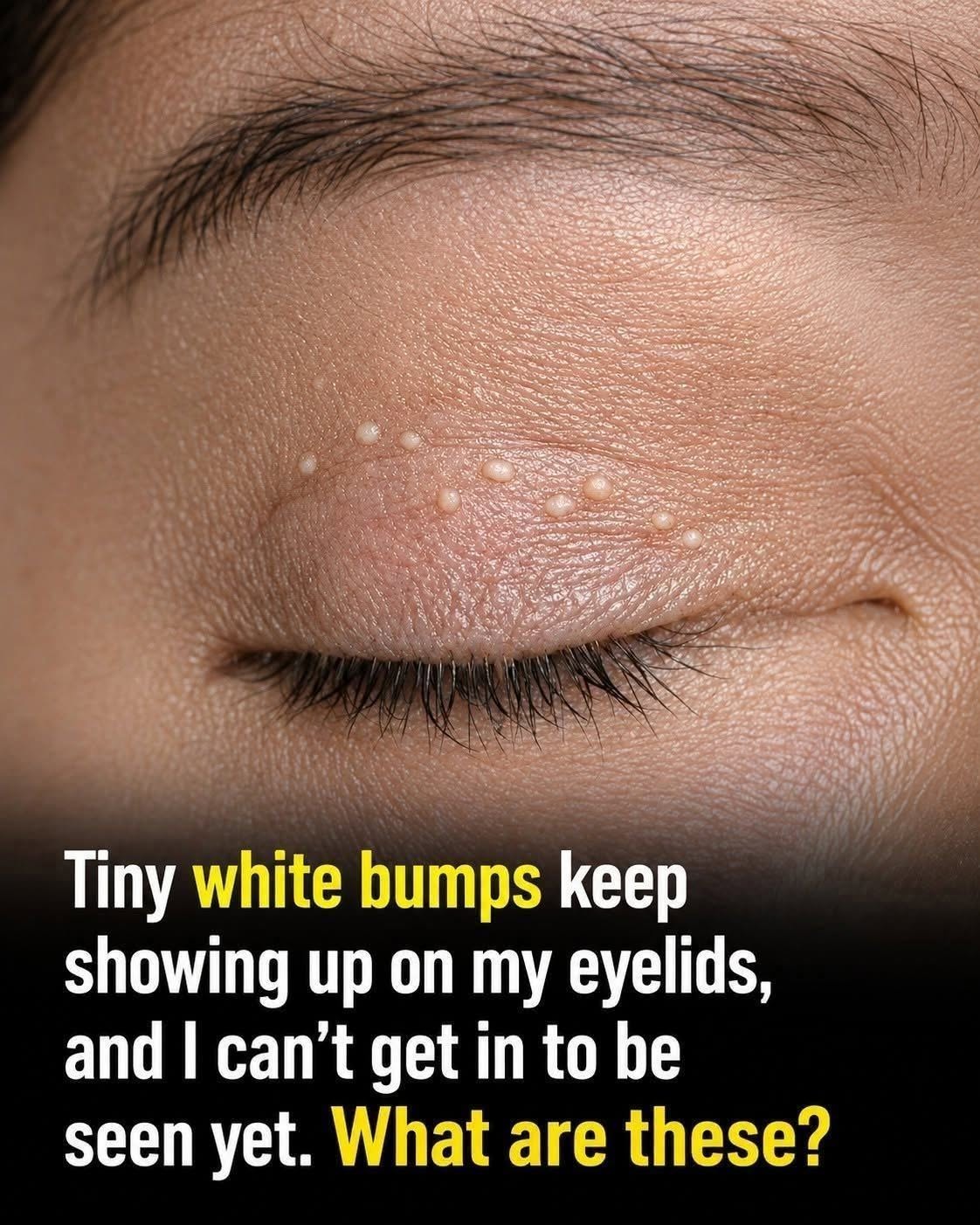
Tiny White Bumps on Your Eyelids? Here’s What They Could Be
Have you ever looked closely in the mirror and noticed tiny white bumps around your eyelids? They can appear almost overnight, remain for weeks or months, and sometimes seem impossible to remove. Although these little bumps can be concerning—especially when they are located so close to the eyes—they are often harmless.
The important thing is understanding what you may be looking at. Several different conditions can cause small white or flesh-colored bumps around the eyelids, and they do not all require the same treatment.
One of the most common possibilities is milia, tiny keratin-filled cysts that frequently appear around the eyes. But milia are not the only explanation. Blocked oil glands, small cysts, irritation, certain skin conditions, and other causes can produce similar-looking bumps.
Here is what those tiny white spots could mean, what causes them, what you can safely do at home, and when it is better to have them checked by a healthcare professional.
What Are Those Tiny White Bumps?
When people notice small white bumps around the eyelids, they often assume they are pimples. However, many eyelid bumps are not acne at all.
The skin around the eyes is especially delicate and contains numerous tiny structures, including oil glands and hair follicles. Because of this, several different types of bumps can develop in the area.
The appearance can provide clues. Some bumps are bright white and firm. Others may be yellowish, skin-colored, red, swollen, or tender. Some remain completely unchanged, while others gradually become larger or irritated.
One of the most recognizable causes is milia.
Milia: A Very Common Cause
Milia are tiny, superficial cysts containing keratin, a protein naturally found in the skin. They commonly appear as small, firm, pearly-white or yellowish bumps.
They are particularly common around the eyes, cheeks, nose, and forehead.
Unlike a traditional pimple, a milium usually does not have an opening that allows its contents to come out. That is one reason squeezing it often does nothing—and can potentially irritate or damage the delicate skin.
Milia can occur in people of all ages, including babies and adults. In newborns, they are especially common and generally disappear naturally. In adults, they can persist much longer.
Primary milia develop directly, while secondary milia can sometimes occur after skin damage, inflammation, burns, rashes, or certain treatments.
Why Do Milia Develop?
The exact reason some people develop milia is not always clear.
They form when keratin becomes trapped beneath the surface of the skin rather than naturally shedding. This creates a tiny cyst that appears as a white or pale bump.
Several factors may contribute to secondary milia, including previous skin irritation or injury. Certain heavy skin products may also make some people more prone to developing small bumps, although milia are not simply caused by having "dirty" skin.
This is important because aggressive cleansing or scrubbing usually does not solve the problem.
In fact, excessive exfoliation around the eyes can cause more irritation.
Milia Usually Aren’t Dangerous
The good news is that uncomplicated milia are generally harmless.
They typically do not cause pain, itching, or significant inflammation. Some disappear on their own, while others can remain for an extended period.
