
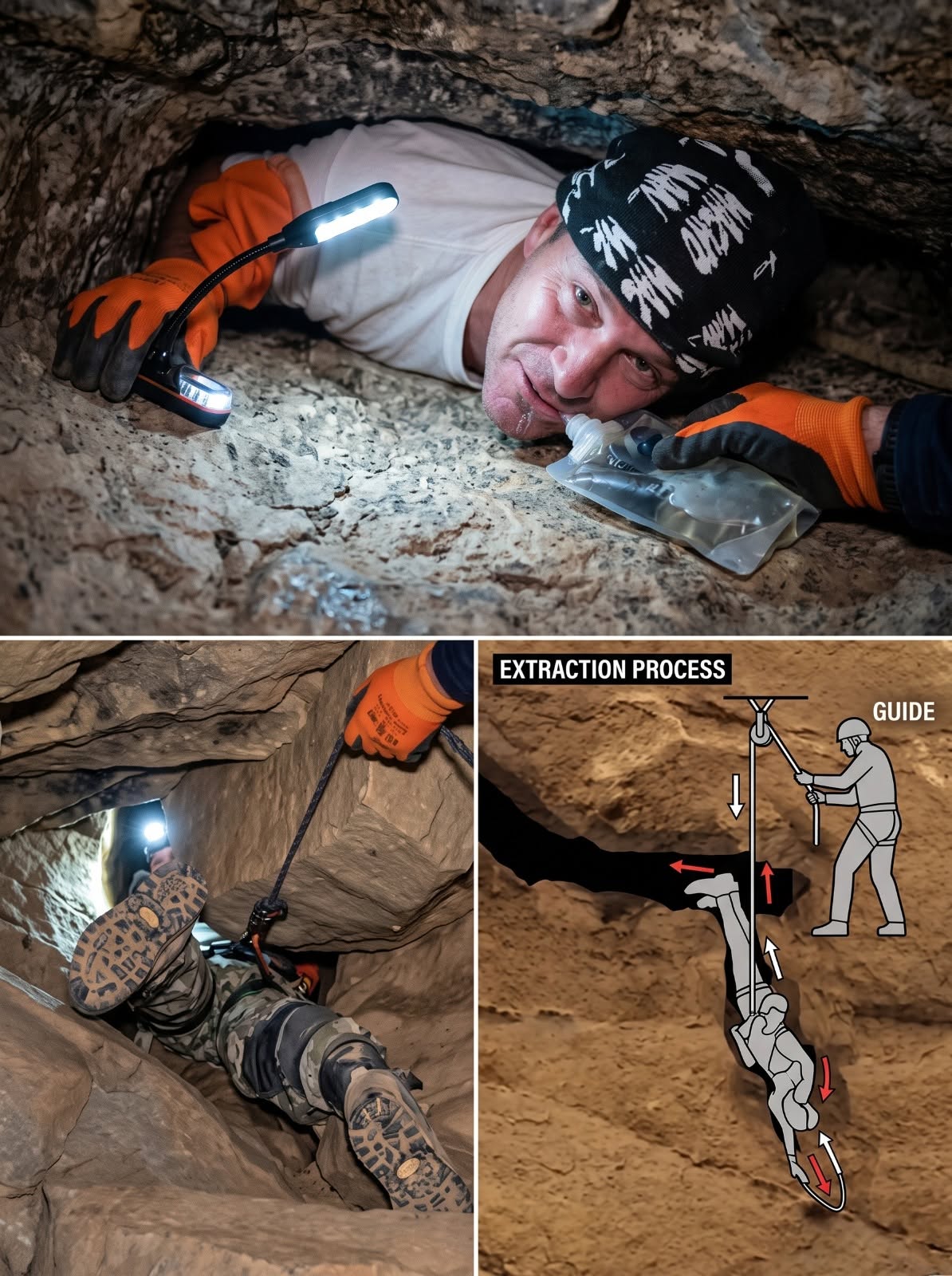
Daniel later reflected on how easily he could have walked past the area.
From the trail, the man had initially looked like a discarded backpack.
It was only a small movement that caught his attention.
That tiny detail changed everything.
Daniel Never Considered Himself a Hero
When people later described what Daniel had done, he didn't seem comfortable with the attention.
He hadn't performed the rescue himself.
He hadn't climbed down the ravine.
He hadn't used specialized equipment.
He had simply noticed someone in trouble and made the decision to call for help.
But that decision was crucial.
Sometimes helping isn't about doing the most dramatic thing.
Sometimes it's about recognizing when a situation is beyond your abilities and getting the right people involved.
Daniel understood that instinctively.
He knew the safest thing he could do was remain nearby, communicate clearly, and avoid creating another emergency.
The Part That Stayed With Him
The image Daniel couldn't forget wasn't the moment the rescue team arrived.
It wasn't the equipment.
It wasn't the difficult terrain.
It was the moment he first realized the “backpack” was actually a person.
He thought about how close he had been to simply continuing down the trail.
How easily something important could have been missed.
And how one small decision—to stop and look again—had changed the morning completely.
A Stranger's Voice in a Scary Moment
There was another detail Daniel remembered.
The man had been frightened.
And although Daniel couldn't fix the situation himself, he could make sure the man wasn't facing it completely alone.
“Help is coming.”
Those words were all Daniel could offer.
But sometimes that's enough.
When someone is injured, frightened, or trapped, they don't necessarily need a stranger to promise that everything will be fine.
They need someone to stay calm.
Someone to call for help.
Someone to let them know they haven't been forgotten.
What This Rescue Teaches Us
The story is a reminder that emergencies in natural areas can develop quickly.
