
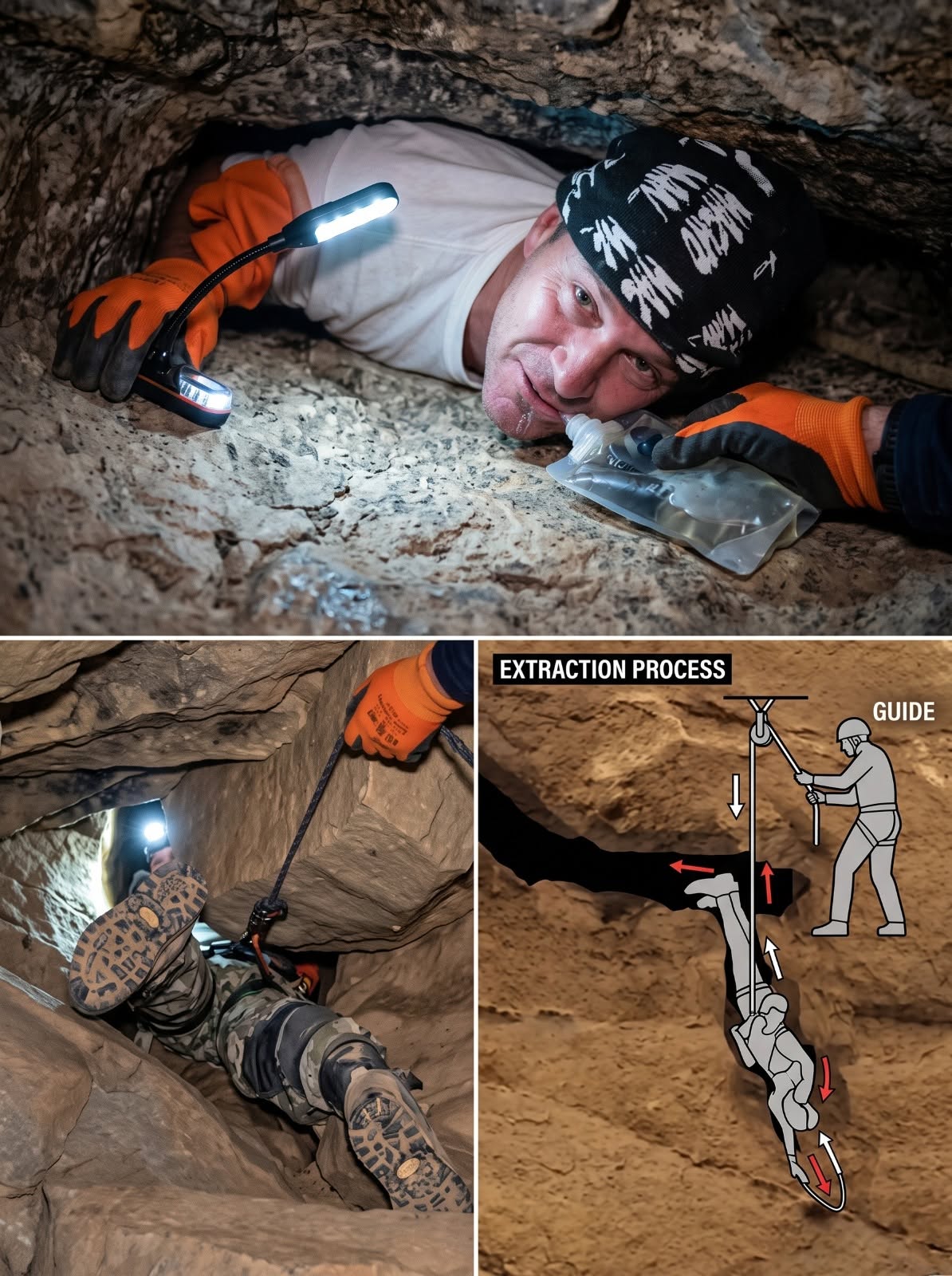
A trail that feels familiar and peaceful can still contain steep slopes, unstable ground, changing weather, and other hazards.
And when someone is injured in a difficult location, attempting an improvised rescue can sometimes make the situation worse.
The safest response is generally to assess the situation from a secure position, contact emergency services, provide accurate location information, and follow professional instructions.
Daniel did exactly that.
He noticed.
He stopped.
He called.
And he stayed.
Those actions may sound ordinary.
But that morning, they made an extraordinary difference.
The Trail Was Quiet Again
By the time the rescue operation was finished, the character of the morning had completely changed.
The same trail that had seemed peaceful earlier now carried a memory Daniel would probably never forget.
The trees were still there.
The stream still moved beneath the wooden bridge.
The hills still stretched into the distance.
But Daniel no longer saw the trail in quite the same way.
He had learned that sometimes the most important moments aren't the ones we plan for.
They are the ones that appear unexpectedly in front of us.
A movement beside a ravine.
A voice calling for help.
A decision to stop.
A phone call.
A team of people willing to climb into difficult terrain because a stranger needed them.
And eventually, a person being brought back to safety.
Sometimes Helping Starts With Simply Paying Attention
Daniel's story doesn't end with a dramatic speech or a heroic pose.
It ends with something much simpler.
He paid attention.
He saw something that didn't look right.
He didn't ignore it.
And when he realized someone needed help, he made the call that brought professionals to the scene.
That is an important lesson for anyone who spends time hiking, camping, or exploring the outdoors.
You don't have to be a trained rescuer to make a difference.
Sometimes the most responsible thing you can do is recognize your limits and get help from people who have the training and equipment to handle the situation safely.
Because when someone is trapped or injured in a dangerous place, the first step toward a rescue may be nothing more complicated than noticing that something isn't right.
And taking the time to stop.
