
Could Wrinkled Fingers Help Us Grip Wet Objects?
Researchers have explored the possibility that water-induced wrinkles may improve our ability to handle wet objects.
The idea is easy to visualize.
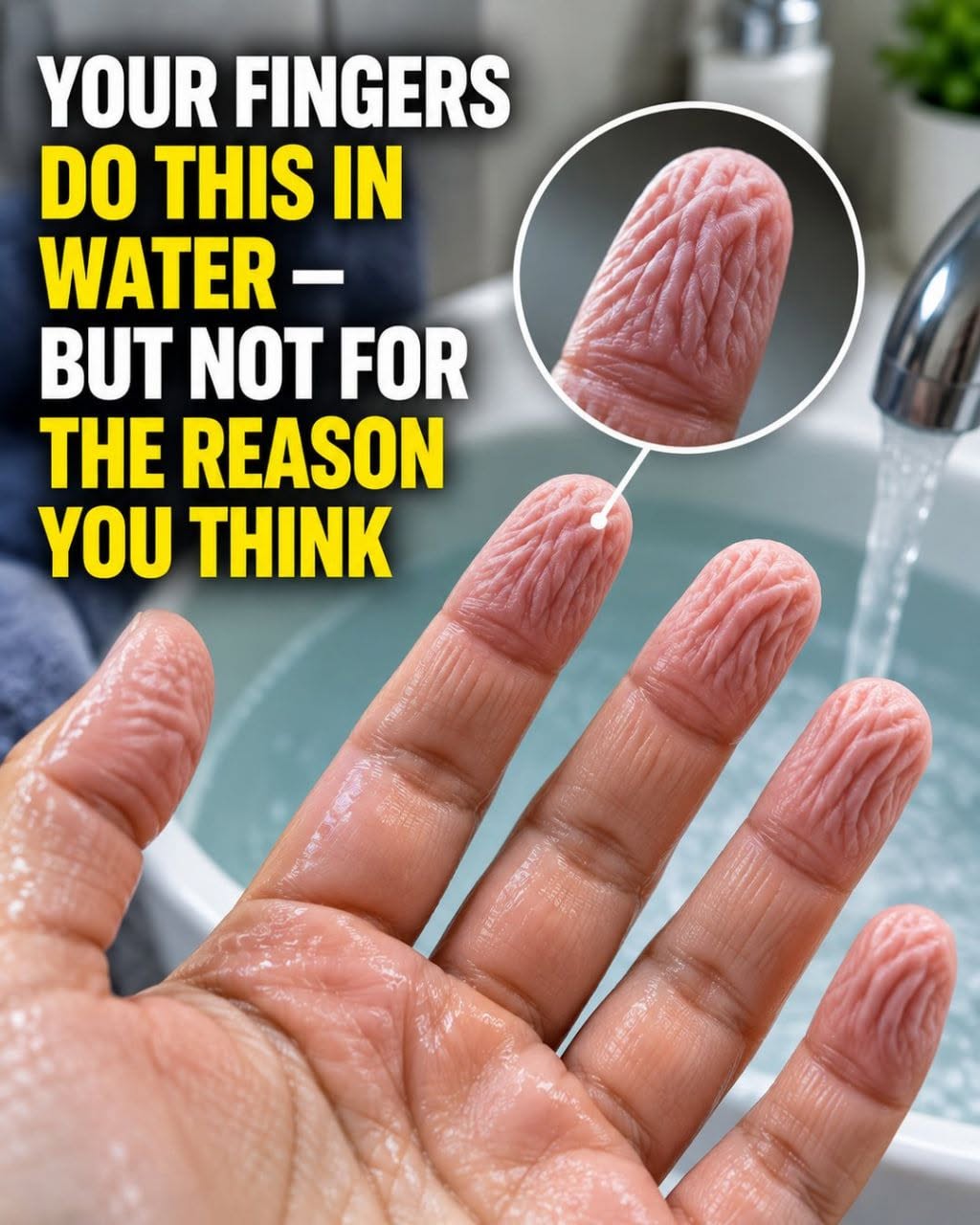
Look closely at a wrinkled fingertip. The ridges and channels resemble patterns that could help move water away from contact surfaces.
Some experiments have reported advantages when people handled wet objects with wrinkled fingers.
However, not every study has found the same performance benefit, so scientists continue to debate exactly how important this proposed function is.
It is therefore better to describe improved wet grip as an interesting evolutionary hypothesis rather than a completely settled explanation.
Are Finger Wrinkles Like Tire Treads?
You may encounter comparisons between wrinkled fingers and tire treads.
The analogy is attractive because both contain channels that could potentially help manage water between two surfaces.
But human skin is far more complicated than a tire.
The comparison can help illustrate the hypothesis, but it should not be treated as proof that finger wrinkles evolved for precisely the same mechanical reason.
Why Don’t Your Fingers Stay Wrinkled?
If wrinkles could potentially offer an advantage in wet environments, you might wonder why fingertips are not permanently shaped that way.
Smooth fingertips may provide advantages under dry conditions, and permanent deep folds could affect sensation or contact with surfaces.
The temporary nature of the response allows the skin to change under prolonged wet conditions and then return toward its usual state afterward.
Again, researchers continue studying the evolutionary reasons behind the response, but its reversibility is one of its most fascinating features.
And the way your fingers return to normal reveals another surprisingly sophisticated part of this everyday process.
What Happens When You Leave the Water?
Once your hands are removed from the water and begin drying, the stimulus associated with the wrinkling response disappears.
Blood vessel behavior changes again, tissue volume returns toward its normal state, and the wrinkles gradually fade.
For most people, the fingers eventually look just as they did before entering the water.
That temporary transformation is another clue that wrinkling is a dynamic physiological response rather than permanent damage to the skin.
Is It Harmful for Your Fingers to Wrinkle?
Ordinary wrinkling after swimming, bathing, or washing dishes is generally a normal response.
The wrinkles themselves are not usually something that needs to be prevented.
However, prolonged water exposure can affect the skin barrier in other ways.
Repeated exposure to water, soaps, detergents, and cleaning products can leave skin feeling dry or irritated, especially in people who wash their hands frequently.
That irritation is separate from the normal neurological mechanism responsible for classic water-induced wrinkling.
Why Does Skin Sometimes Feel Dry After Being in Water?
It sounds contradictory: how can water make skin feel dry?
Water itself is not necessarily moisturizing in the way many people imagine.
