
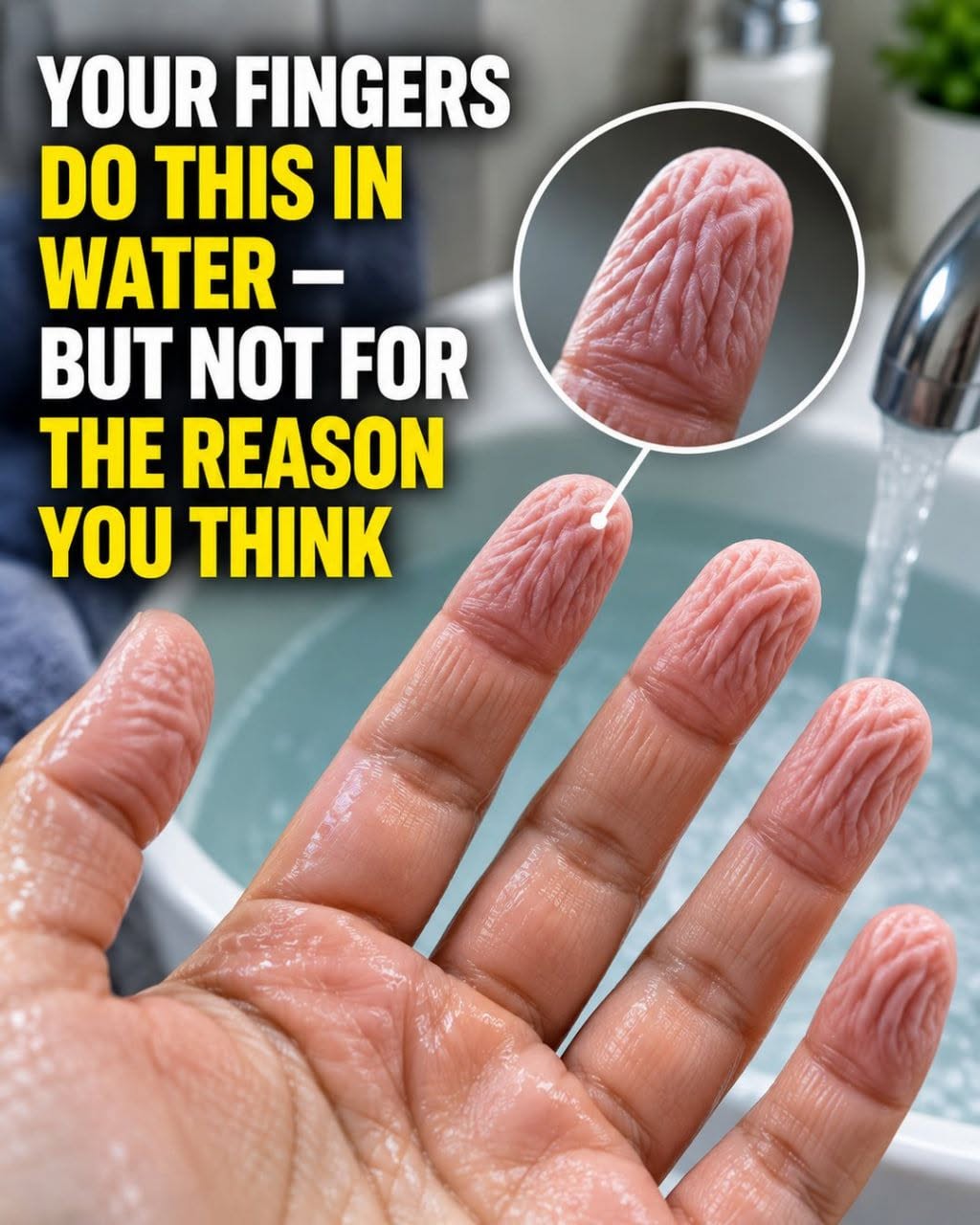
Long exposure, particularly when combined with hot water and soap, can interfere with oils and other components of the skin’s protective barrier.
Once the water evaporates, the skin may feel tight or dry.
This is especially noticeable after long hot showers or frequent hand washing.
Does Hot Water Make a Difference?
Water temperature can influence how skin feels and how quickly various changes occur.
Very hot water can also be more irritating to the skin than comfortably warm water, particularly when exposure is frequent or prolonged.
For everyday washing, excessively hot water is usually unnecessary.
Comfortable water temperatures and gentle skin care are generally more practical.
What About Salt Water?
Fingers can wrinkle in different types of water, although the timing and appearance can vary.
The response is not limited to swimming pools or bathtubs.
People may notice wrinkled fingertips after spending time in the ocean as well.
The chemistry and temperature of the water can influence the skin, but the autonomic nervous system remains central to the classic wrinkling response.
Why Scientists Became Interested in Such an Ordinary Phenomenon
Finger wrinkling seems trivial until you ask a simple question: why does it happen?
That question leads directly into the relationship between the skin, blood vessels, and nervous system.
Historically, observations involving nerve injuries helped researchers realize that the process could not be explained simply by water soaking into skin.
That transformed an everyday bathtub curiosity into a useful physiological phenomenon.
Doctors Have Even Studied the Response
Because water-induced wrinkling depends on intact autonomic nerve pathways, researchers have investigated whether the response could provide information about certain aspects of nerve function.
Specialized wrinkling tests have appeared in medical research and clinical contexts.
That does not mean people should diagnose themselves by soaking their hands in water.
Many factors can affect how wrinkling appears, and medical interpretation requires appropriate context and expertise.
For everyday purposes, the phenomenon is best appreciated as an interesting demonstration of how nerves influence the skin.
Why One Hand Might Look Different From the Other
Minor differences between hands can occur for ordinary reasons.
Water exposure may not be perfectly equal, skin thickness varies, and small differences in circulation or skin condition can influence appearance.
A slight difference does not automatically indicate a health problem.
Persistent or unexplained changes accompanied by numbness, weakness, pain, color changes, or other concerning symptoms are a different situation and can be discussed with a healthcare professional.
Do Children’s Fingers Wrinkle Too?
Yes. Water-induced wrinkling is not limited to adults.
Children commonly develop pruney fingertips after spending enough time swimming or bathing.
In fact, many people first become curious about the phenomenon during childhood after noticing their hands at the end of a long bath.
