
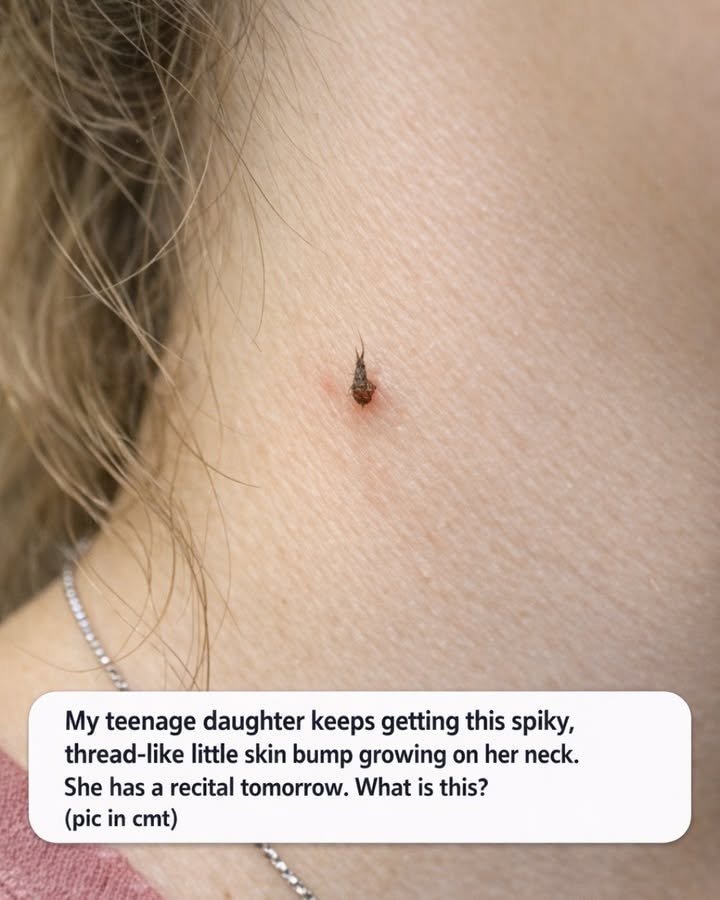
- Whether It Can Be Covered for Photos or the Stage
If the bump is very small, evening out the surrounding skin tone may make it less noticeable under bright stage lights without irritating the growth itself.Health Conditions
A thin layer of non-irritating concealer around the neck may look more natural than applying a thick
layer directly
onto a raised lesion.
If she must wear stage makeup, use clean hands or a fresh sponge and remove the makeup gently afterward. Avoid repeatedly touching or rubbing the bump.
For a recital, comfort and minimal irritation are generally more useful than attempting an aggressive last-minute treatment.
With the recital only a day away, the most important thing is avoiding a last-minute treatment that could leave the skin red or sore—after the performance, there are safer ways to determine exactly what the growth is.
- What Not to Do Before a Big Event
It is generally best to avoid drugstore wart removers on the neck without professional guidance, especially immediately before an important event. Many over-the-counter wart treatments contain salicylic acid, which can irritate skin when used incorrectly or on sensitive areas.
Freeze-at-home products can also cause blistering, irritation, or temporary discoloration if used improperly. The neck and areas
close
to the face require particular caution.
Also avoid picking at the growth. If it is a wart, picking can irritate the area, cause bleeding, and potentially contribute to spreading the virus to nearby skin. A small bump is usually easier to conceal than a fresh wound.
- How Doctors Usually Confirm It
In many cases, a primary care clinician or dermatologist can assess a suspected filiform wart by examining its appearance, location, and texture.
If the growth has an unusual color, an irregular border, changes rapidly, or repeatedly bleeds without being bumped, a dermatologist may examine it more closely.
If the diagnosis remains uncertain, a clinician may occasionally recommend removing or sampling the lesion for examination. This is done to establish the diagnosis rather than because every unusual-looking growth is dangerous.
- Common Treatment Options After the Recital
Treatment depends on the exact diagnosis, location, and size of the growth.
