
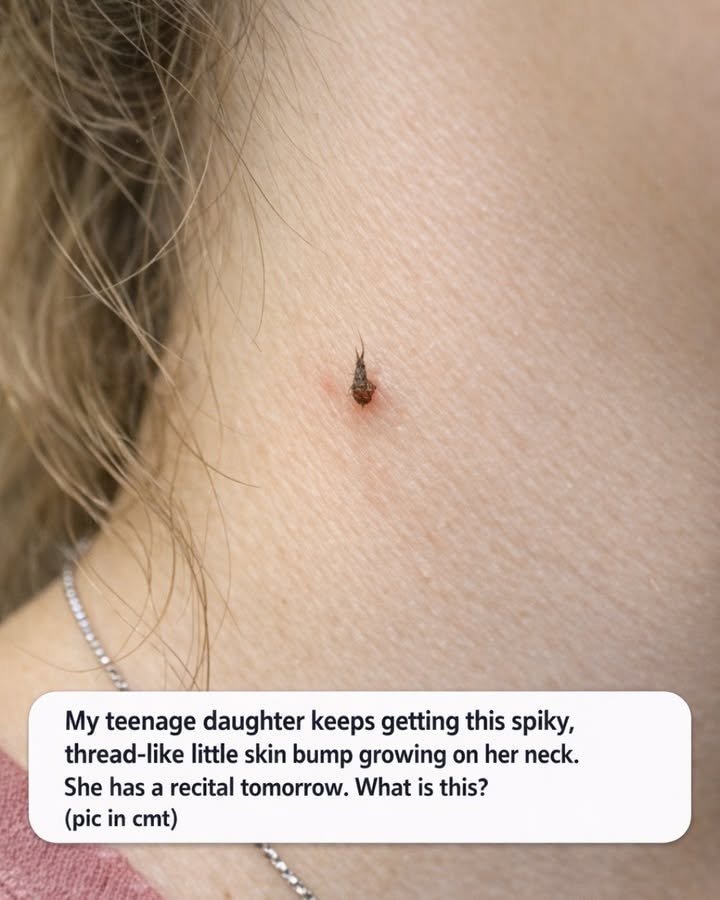
If
a clinician confirms that it is a filiform wart, possible office treatments can include carefully applied liquid nitrogen, removal with a small instrument after appropriate numbing, electrosurgery, or certain prescription treatments.
For a small lesion on the neck, treatment may be relatively quick, but healing time varies.
After freezing, the area can become red and may develop a small blister or crust. After removal with an instrument, there may be a small sore area for several days.
Basic aftercare may include gentle cleansing, protecting the area from friction, and using petroleum jelly when recommended by the treating clinician. Follow the specific aftercare instructions provided by the healthcare professional.
- When to Call Sooner Rather Than Later
A small, stable bump does not necessarily require an emergency visit. However, arrange medical evaluation sooner if the growth:
Changes rapidly over a short period
Becomes very dark or develops markedly uneven coloring
Bleeds without
being bumped or irritated
Becomes significantly painful
Is associated with a larger lump underneath the skin
Is accompanied by many new or unusual lesions appearing over a short period
It is also sensible to seek professional advice if the growth is close to the eye, inside the nostril, or along the lip border, because these locations can be more difficult to treat safely.
If your daughter has a condition or medication that affects her immune system, or has a history of unusual skin growths, a clinician should also evaluate the lesion rather than relying on home treatment.
- How Contagious Is It in Everyday Life?
Warts can spread, but simply being in the same room as someone with a wart is not generally the main concern. Transmission is more associated with direct contact, picking at the lesion, shaving over it, or sharing personal items that come into close
contact with the
affected area.
For the next few weeks, it is sensible for her not to fiddle with the growth or shave directly over it. Avoid sharing razors, washcloths, makeup tools, or other personal items that could come into contact with the lesion.
Washing hands after touching the area is another simple precaution that can reduce the chance of transferring the virus to another part of the body or to another person.
- Why Teenagers Often Find This Especially Upsetting
