
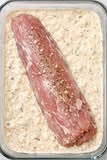
Kosher salt adheres better to the meat and provides a cleaner flavor than table salt. Freshly cracked black pepper is recommended.
Optional Aromatics
2–3 sprigs of fresh rosemary or thyme for an herbed finish.
Equipment Needed
Rimmed Baking Sheet or Oven-Safe Skillet: A cast-iron skillet is excellent for retaining heat and creating a beautiful crust.
Meat Thermometer: The most critical tool for ensuring juicy, perfectly cooked pork.
Sharp Chef's Knife: For trimming silver skin and slicing the finished roast.
Paper Towels: To dry the meat thoroughly before seasoning.
Small Mixing Bowl: For combining your seasonings.
Step-by-Step Instructions
Step 1: Prep & Preheat
Preheat your oven to 425°F (220°C). High heat is necessary to sear the outside quickly while keeping the inside moist.
Bring to Temperature: Take the pork out of the fridge about 15 minutes before cooking. Cold meat cooks unevenly, often resulting in a dry exterior before the center is done.
Dry the Meat: Pat the tenderloin completely dry with paper towels. Moisture is the enemy of browning; if the meat is wet, it will steam instead of roast, preventing that delicious golden crust from forming.
Step 2: Season the Pork
Place the dried tenderloin on your baking sheet or skillet. Drizzle the olive oil over the meat and rub it in with your hands to coat every surface evenly.
Make the Rub: In a small dish, combine the minced garlic, kosher salt, and black pepper.
Apply the Seasoning: Press this mixture firmly onto all sides of the pork. Pressing helps the seasoning adhere to the meat during the roasting process so it doesn't fall off onto the pan.
Optional: Tuck fresh rosemary or thyme sprigs underneath or on top of the pork for an infused aroma that fills your kitchen.
