
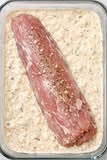
Step 3: Roast to Perfection
Place the pork in the center rack of the preheated oven. Roast for 20–25 minutes, depending on the thickness of your tenderloin.
Check the Temperature: Begin checking the internal temperature at the 20-minute mark. Insert your meat thermometer into the thickest part of the loin, avoiding the pan bottom.
Target Temp: Remove the pork when it reaches 145°F (63°C). The USDA recommends this temperature for safe consumption while maintaining juiciness. The meat will still look slightly pink in the center, which is normal and desirable.
Carryover Cooking: Remember that the temperature will rise another 5 degrees while the meat rests, so don't wait until it reads 150°F in the oven.
Step 4: Rest Before Slicing
Transfer the pork to a cutting board and tent it loosely with foil. Let it rest for 5–10 minutes before cutting.
Why Rest? During cooking, juices are pushed to the center of the meat. Resting allows them to redistribute throughout the loin. If you slice immediately, the juices will run out onto the cutting board, leaving you with dry, tough meat.
Slice and Serve: Cut into ½-inch medallions against the grain for the most tender bite. Serve warm with your favorite sides.
Chef's Tips & Tricks
Removing the Silver Skin: If your tenderloin hasn't been trimmed, look for a shiny, silvery layer of connective tissue. Slide a sharp knife under it and slice it away in long strips, angling the blade slightly upward to avoid removing too much meat. Leaving this on will make the meat chewy and unpleasant.
Don't Overcook: Pork tenderloin is very lean. Unlike pork shoulder or butt, it has little fat to keep it moist if overcooked. Once it hits 145°F, take it out immediately. Every extra minute in the oven can make a difference in texture.
The Sear Option: For an extra crust, you can sear the seasoned pork in a hot skillet on the stove for 2 minutes per side before transferring the whole skillet into the oven. This adds an extra layer of flavor through the Maillard reaction.
Uniformity Matters: If your tenderloin has a thick end and a very thin tail end, you can tuck the thin end underneath to create a uniform thickness. This prevents the thin end from drying out before the thick end is fully cooked.
Garlic Warning: If using fresh minced garlic, be aware it can burn at high temperatures. If you notice the garlic browning too quickly during roasting, you can loosely tent the pork with foil for the last 5–10 minutes of cooking.
Serving Suggestions
This pork pairs beautifully with roasted vegetables or starches that can soak up the delicious juices.
Vegetable Sides:
Roasted asparagus with lemon zest
Garlic butter green beans
