
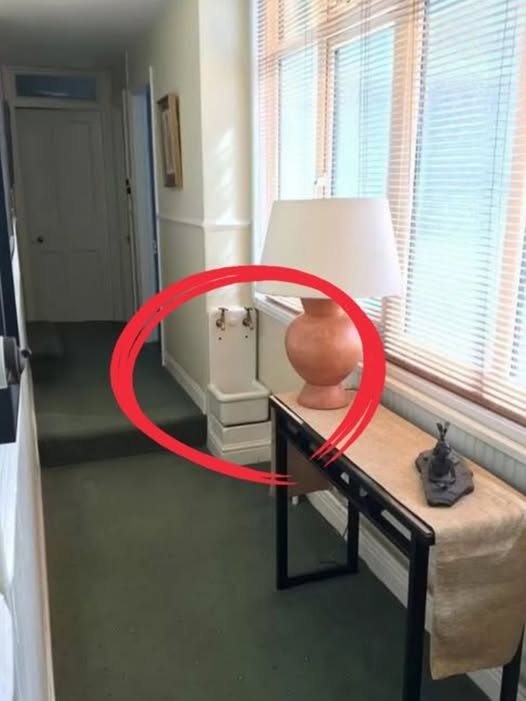
That’s where hallway sinks came in.
These fixtures served as a simple and effective “hygiene station” for the household. Instead of heading upstairs or into a distant bathroom, family members could stop right there in the hallway to “wash your hands after gardening, working, or coming in from outside.” It was a practical solution that helped maintain cleanliness without adding unnecessary inconvenience.
In many cases, these sinks were strategically placed near entry points or high-traffic areas. This made it easy for people to “rinse off dirt before entering the main living areas.” By doing so, they could keep the rest of the home cleaner and more comfortable.
Hallway sinks were especially useful for families with children. Anyone who has ever watched kids come inside after playing outdoors knows how quickly mud and dirt can spread. Back then, parents relied on these sinks to manage that problem more efficiently.
Instead of sending children upstairs—risking muddy footprints along the way—parents could use the hallway sink to “give kids a quick clean-up spot without tracking mud upstairs.” It saved time, reduced cleaning, and made everyday routines just a little bit easier.
The design of these sinks was typically quite simple. Most of them provided “cold water only,” which was enough for basic handwashing and rinsing. Hot water systems were more complex and expensive at the time, so keeping things minimal helped reduce installation and maintenance costs.
In fact, many of these sinks were built with “minimal piping,” making them more affordable and easier to incorporate into existing homes. They weren’t meant to be luxurious or decorative—they were designed with function in mind.
You could often find hallway sinks in a variety of home styles from that era. They appeared in “farmhouses,” where practicality was essential for managing outdoor work and chores. They were also common in “Victorian homes,” which often featured unique architectural details and layouts.
In growing urban areas, these sinks showed up in “early 20th-century city row houses” as well. These homes were typically compact, so having an additional washing station outside the main bathroom provided a helpful level of convenience.
Over time, as plumbing technology improved and modern homes began to include multiple bathrooms, the need for hallway sinks gradually disappeared. People no longer relied on a single upstairs bathroom, and it became easier to include sinks in more appropriate, dedicated spaces.
As a result, hallway sinks started to feel outdated. What was once a clever and practical solution began to look unusual or even unnecessary to newer generations.
