
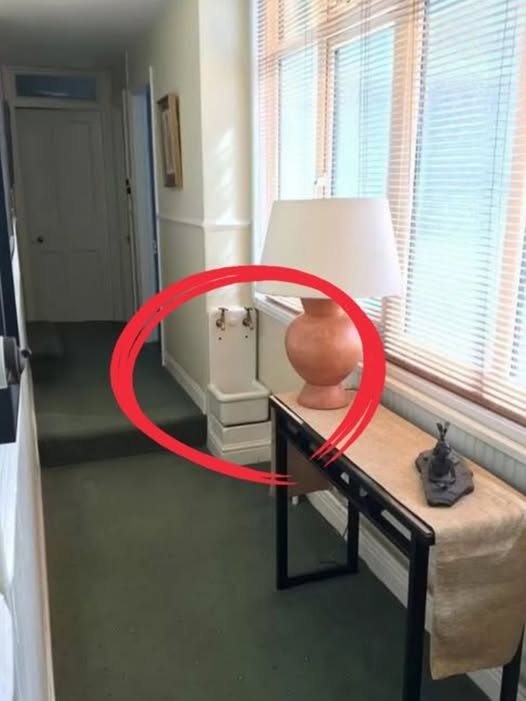
Today, when someone encounters one of these sinks in an older home, it often sparks curiosity—or even amusement. Without knowing the history, it’s easy to see why the design might appear “awkward.” After all, it doesn’t match the way we expect homes to be organized in the present day.
However, when you look at it through the lens of history, it becomes clear that this feature was actually an example of “smart design.” It addressed real needs in a thoughtful and efficient way, using the resources available at the time.
It’s also important to clear up a few common misconceptions. Hallway sinks were not created for unusual or exaggerated purposes. They weren’t “a foot washer!” or “a spittoon sink!” despite what some might jokingly suggest.
Instead, they served a straightforward and practical role: “handwashing, old-school style.”
There’s something meaningful about these small details in historic homes. They remind us that design is always shaped by the needs and limitations of its time. What seems strange today might have been incredibly useful in the past.
Hallway sinks are a perfect example of this idea. They tell a story about how people adapted to changing technology, balanced convenience with cost, and found creative ways to improve daily life.
In a way, they also encourage us to think differently about modern design. While we may not need hallway sinks anymore, the principle behind them—making everyday tasks easier and more efficient—still matters just as much.
As you continue your imagined tour of that historic home, you might find yourself appreciating these details in a new way. The creaking floors, the gentle drafts, and even that unexpected sink in the hallway all contribute to a richer understanding of how people once lived.
Instead of seeing the sink as odd or misplaced, you can recognize it as a small but meaningful piece of history. It represents a time when innovation didn’t always mean complexity—sometimes, it simply meant placing something useful exactly where it was needed most.
And that’s what makes these homes so interesting to explore. Every corner, every fixture, and every design choice has a story behind it. You just have to look a little closer—and maybe ask a few questions along the way.
So the next time you come across something that seems out of place in an older home, take a moment to consider its purpose. There’s a good chance it wasn’t random at all. It might just be another example of practical thinking from a different era—quietly waiting to be understood again.
