
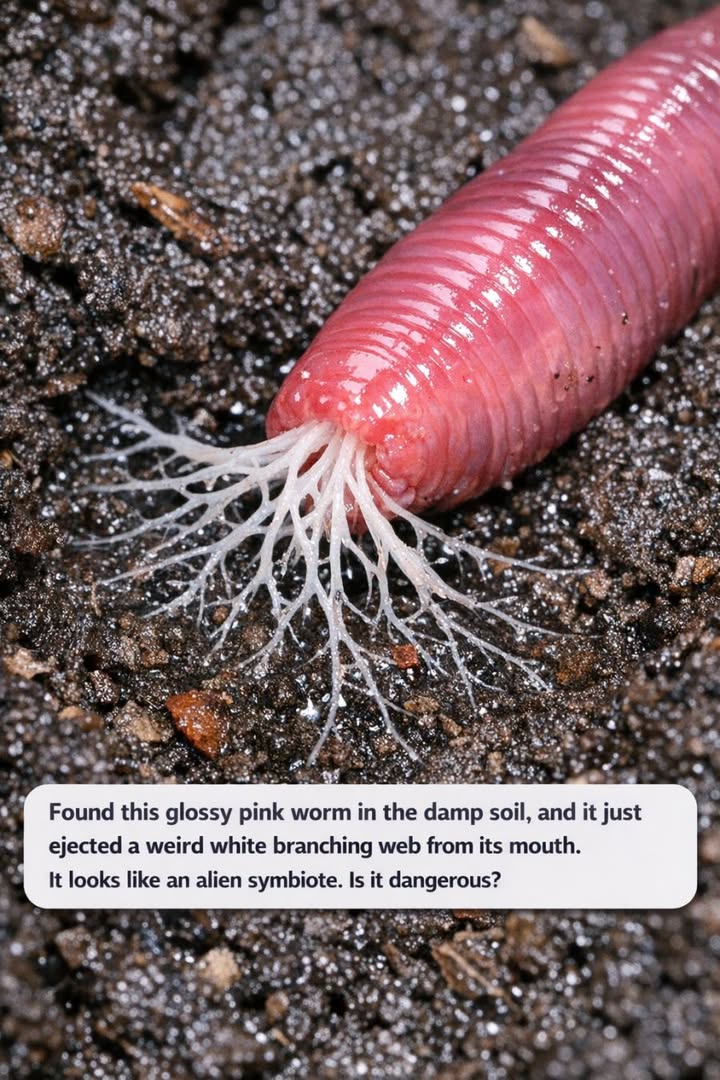
When a Gorgonorhynchus ribbon worm feels threatened — such as when a gardener's hand or tool suddenly disturbs the soil around it — it fires the proboscis as a defensive reflex rather than a hunting action. The branching white structure erupts outward, splatters against whatever is nearby, and looks, from any reasonable human perspective, like something no living creature should be capable of producing. Scientists who study these animals note that a worm observed firing its proboscis defensively and then convulsing afterward is an extremely stressed animal doing everything it can to escape — not a dangerous creature attacking.
Is It Dangerous?
No. Gorgonorhynchus ribbon worms and their relatives pose no danger to humans. They do not bite in any meaningful sense, their proboscis is designed to capture small invertebrate prey and has no mechanism for injuring a human, and they produce no venom, irritating secretion, or toxin that affects people. The white branching proboscis that looks so alarming is essentially the animal's tongue turned inside out under extreme stress — it is not a weapon directed at you. These animals are small, soft-bodied, and fragile. The worm you found is far more concerned about surviving your presence than you need to be about its.
From a garden perspective, ribbon worms are also entirely harmless to plants and soil. Unlike invasive jumping worms — a genuinely problematic group of earthworm species from eastern Asia that are causing real ecological damage in North American gardens — ribbon worms are predators of small invertebrates and have no interest in plant roots, soil structure, or garden beds. If anything, a ribbon worm in your soil is a sign of a healthy, ecologically diverse garden environment with enough small invertebrate prey to support a predator at this level.
