
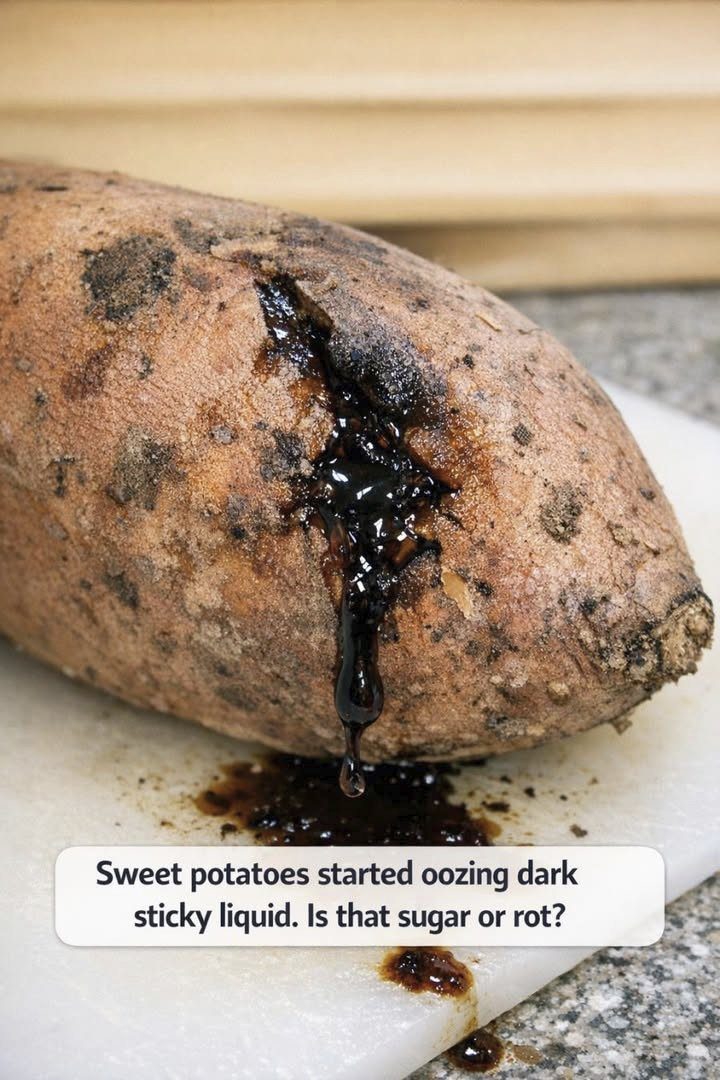
2. When the Ooze Is Just Natural Sugar Seeping Out
When the sticky liquid is primarily composed of natural sugars, it is generally harmless and is simply a sign of the sweet potato’s sugars becoming more concentrated. This is often the case when the liquid is light in color and has a sweet aroma. The occurrence is also more common in sweet potatoes that have been stored for extended periods, allowing time for the sugars to develop and then seep out.
In these instances, the sweet potatoes are still safe to eat. The liquid can even contribute to a richer flavor when cooked, as the caramelized sugars enhance the natural sweetness of the dish. To minimize this oozing, ensure that sweet potatoes are stored in a cool, dry place, ideally at temperatures between 55°F to 60°F (13°C to 16°C).
3. Visual Clues: What Safe Sugar Syrup Looks Like
Safe sugar syrup exuding from sweet potatoes will typically appear as a clear to amber-colored liquid. It should be relatively thin and sticky, similar to honey. If you notice the syrup is dark but still clear, it may have simply started to caramelize, which is a harmless process.
In contrast, if the liquid is opaque, has a cloudy appearance, or shows signs of mold, it may indicate spoilage. Additionally, check for any unusual colors, such as green or blue, which can suggest the presence of mold or bacterial growth.
4. Smell and Texture Tests: Quick Ways To Tell Sugar From Spoilage
The smell of the exudate is a significant indicator of its nature. Safe sugar syrup will have a sweet, pleasant aroma, reminiscent of caramel or molasses. If the smell is sour, musty, or unpleasant, it may indicate spoilage.
In terms of texture, natural syrup should be sticky and smooth. If the liquid feels slimy or gritty, this could be a sign of bacterial activity. Always trust your senses—if something smells or feels off, it’s better to err on the side of caution.
