
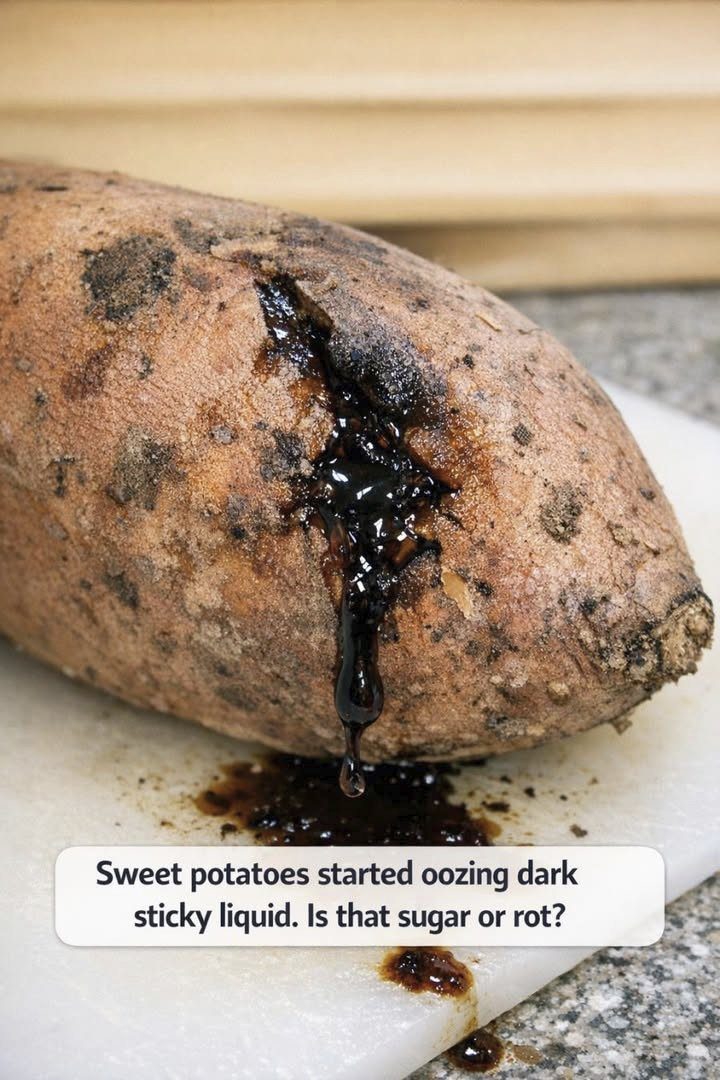
5. Color Changes: Normal Caramelization Versus Signs of Rot
Caramelization is a normal process where the sugars in sweet potatoes turn a darker color when exposed to heat, either during cooking or due to warm storage conditions. This process results in a brownish, syrupy liquid that is safe and adds flavor.
However, if the sweet potato itself shows signs of darkening flesh, especially if it’s accompanied by a mushy texture or black spots, it may indicate rot. This discoloration often signifies that the sweet potato has been exposed to excessive moisture or has been stored improperly, leading to decay.
6. How Internal Sugar Breakdown Creates That Sticky Exudate
The breakdown of starches into sugars inside sweet potatoes is a natural process that occurs over time and is facilitated by enzymes such as amylase. This conversion is more pronounced in warmer environments and can be accelerated by physical damage to the sweet potatoes.
Once the sugars are formed, they can start to seep out through any cuts or bruises. This is why whole, unblemished sweet potatoes are less likely to ooze than those that have been cut or damaged. The sticky exudate is simply the sugars mixing with the moisture from the sweet potato’s cells, forming a syrup that oozes out when the integrity of the skin is compromised.
