
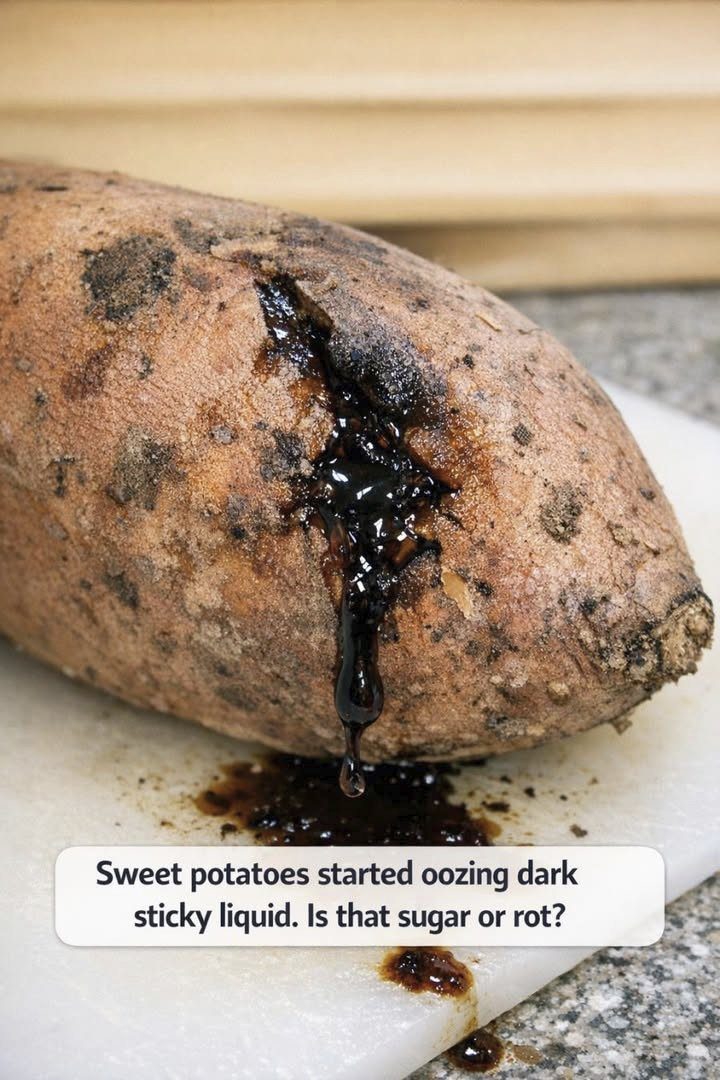
7. When the Ooze Signals Mold, Bacteria, or Serious Decay
Sometimes, the sticky liquid can be an indicator of spoilage, particularly if it is accompanied by other signs such as a foul odor, mold growth, or a significant change in texture. Mold can appear as fuzzy growths on the surface or within any liquid that has pooled.
Bacterial rot may cause the sweet potato to become overly soft, mushy, and emit an off-putting odor. In these cases, the sweet potato should be discarded, as consuming spoiled produce can lead to foodborne illness.
8. Storage Mistakes That Turn Sweet Potatoes From Sweet to Spoiled
Improper storage is one of the main reasons sweet potatoes can go from sweet to spoiled. Storing sweet potatoes in areas that are too warm or too humid can promote the growth of mold and bacteria. Ideal storage conditions are cool, dry, and dark, preventing excess moisture and warmth from accelerating spoilage.
Avoid refrigerating sweet potatoes, as the cold temperature can alter their texture, making them hard and less flavorful. Instead, keep them in a well-ventilated area where air circulation can help prevent moisture buildup.
9. Safe-Handling Rules: What You Can Trim and Still Eat
If a sweet potato displays minor signs of oozing but does not exhibit spoilage signs such as mold or foul odors, it can often be salvaged by trimming away the affected areas. Use a clean knife to cut away any discolored or soft spots, ensuring that you remove all compromised sections.
After trimming, rinse the sweet potato under cold water to remove any remaining syrup or potential contaminants. Cook the sweet potato thoroughly, as heat can help kill any remaining bacteria and make the sugars safe to consume.
