
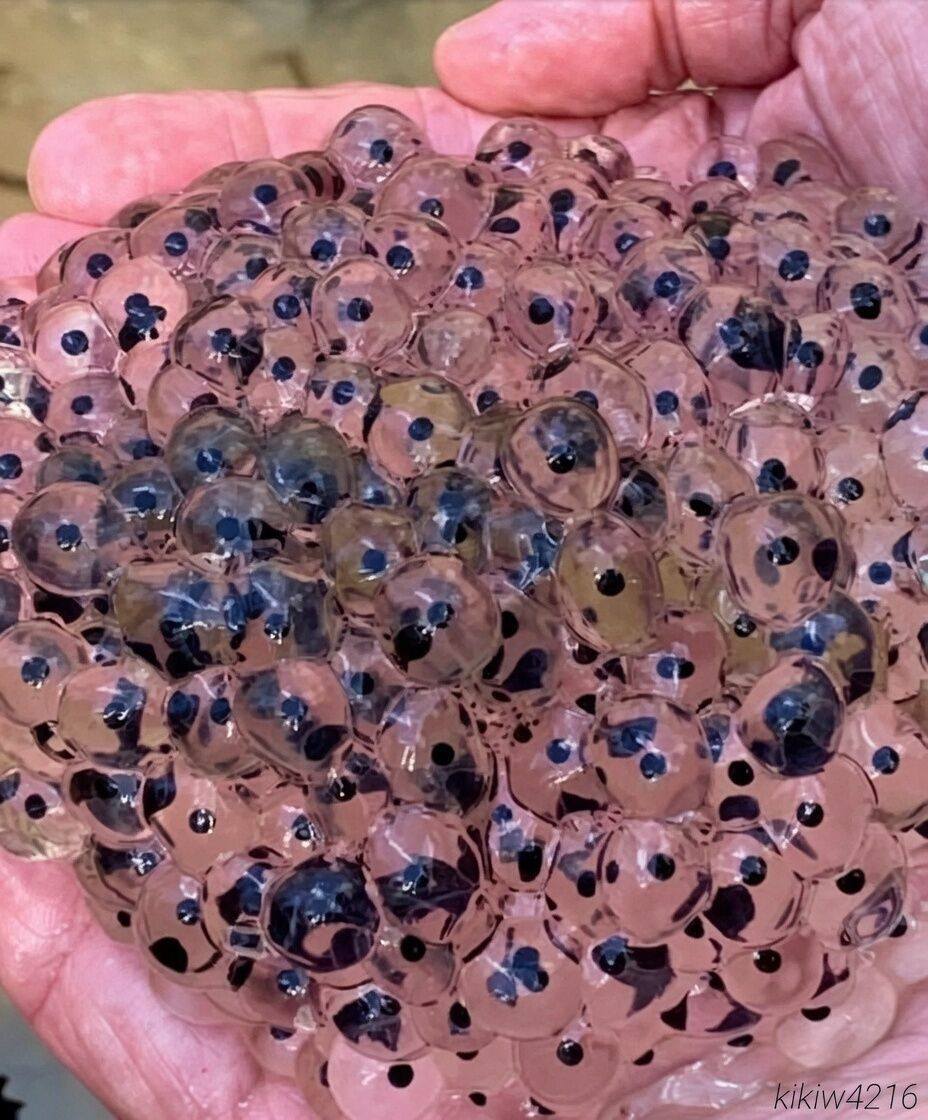
Where Are These Egg Masses Found?
Egg masses like these are typically found in calm, shallow freshwater environments. Vernal pools, seasonal ponds, marshes, and slow-moving streams provide ideal conditions for amphibian reproduction.
These habitats are often free of large fish, which are major predators of amphibian eggs and larvae. By choosing temporary or isolated water bodies, species like the Southern leopard frog increase the chances that their offspring will survive.
Breeding usually occurs in early spring, triggered by rising temperatures and increased rainfall. During this time, male frogs gather at breeding sites and produce distinctive calls to attract females.
Once a female selects a mate, the pair engages in a behavior known as amplexus, where the male clasps the female as she releases eggs into the water. The male simultaneously releases sperm, fertilizing the eggs externally.
The result is the formation of these dense, gelatinous clusters—each one containing the next generation.
The Journey from Egg to Tadpole
Inside each tiny sphere, a remarkable transformation is underway. Following fertilization, the embryo begins rapid cell division, forming the basic structures of a developing organism.
Within days, the neural tube forms, eventually giving rise to the brain and spinal cord. The eyes begin to develop early, contributing to the prominent dark spot visible from the outside.
As development continues, the embryo elongates, forming a tail and primitive gills. At this stage, it resembles a tiny tadpole curled within the jelly.
Environmental conditions play a crucial role in determining the pace of development. Warmer temperatures generally accelerate growth, while cooler conditions slow it down.
In some cases, embryos can even respond to external threats. Vibrations caused by predators may trigger early hatching, allowing the tadpoles to escape before being consumed.
Eventually, the jelly begins to break down, and the fully formed tadpoles wriggle free into the surrounding water. From there, they begin feeding on algae and organic matter, continuing their journey toward metamorphosis.
Metamorphosis: A Radical Transformation
The transition from tadpole to adult frog is one of the most dramatic transformations in the animal kingdom. Over weeks or months, the tadpole undergoes a complete restructuring of its body.
Legs develop, first the hind limbs and then the front. The tail gradually shrinks and is reabsorbed. Gills are replaced by lungs, allowing the young frog to breathe air.
This process, known as metamorphosis, enables amphibians to transition from an entirely aquatic lifestyle to one that includes land. It is a key factor in their evolutionary success, allowing them to exploit multiple ecological niches.
