
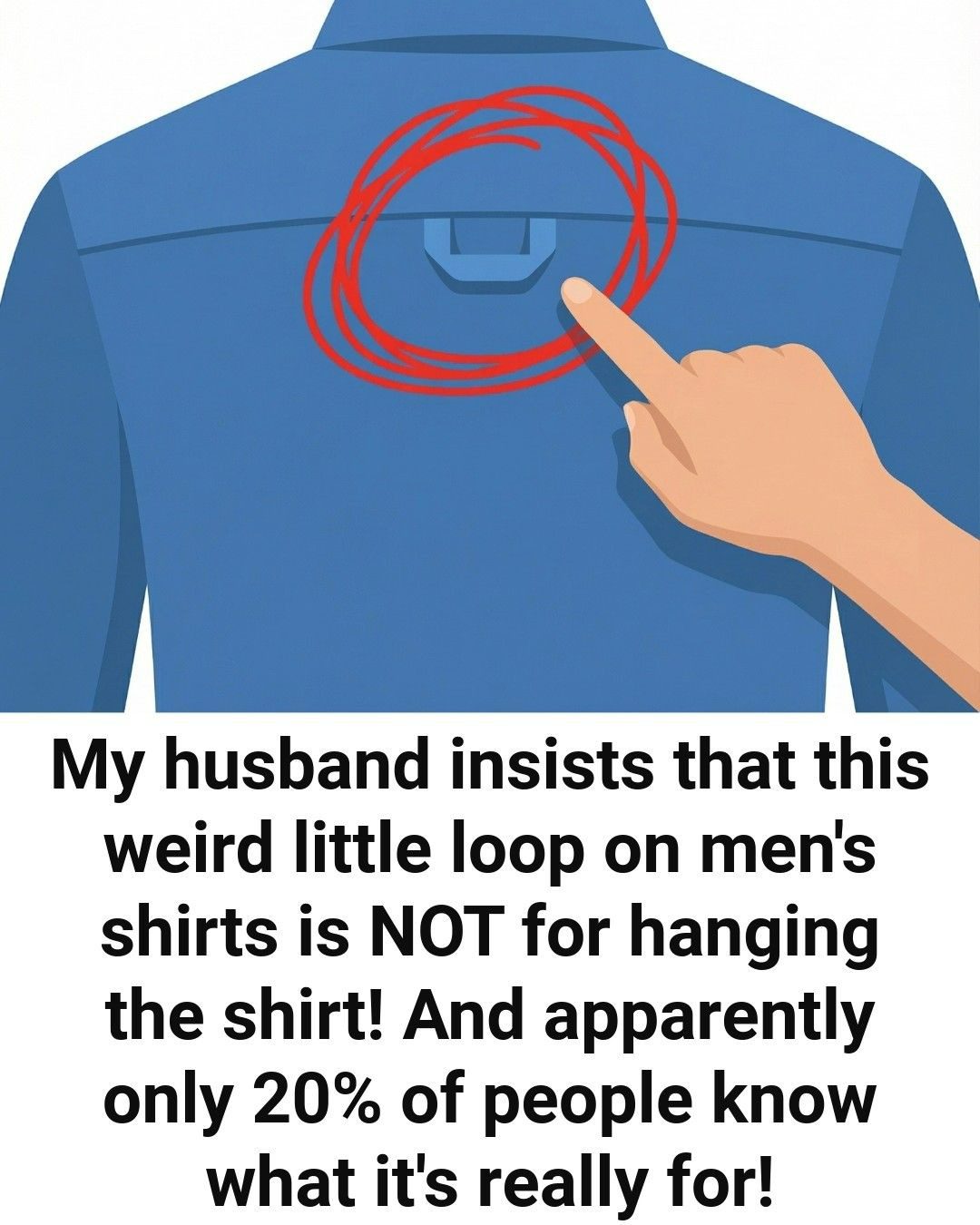
Today, the locker loop's original functions — naval practicality, athletic-locker utility, and social signaling — have all largely become obsolete. Most people who own button-down shirts with loops use hangers, not hooks, and the loop's status as a romantic signal faded so completely that virtually no one under fifty knows the custom existed. What remains is the loop itself, preserved in the shirts of brands like Brooks Brothers, Ralph Lauren, J.Crew, Gitman Vintage, and of course GANT — where it began as a civilian fashion feature — as a quiet piece of heritage design.
For menswear enthusiasts, the presence of a locker loop on a shirt can indicate adherence to traditional design standards and attention to craft detail. It is a signal of a certain kind of quality — not merely functional quality, but the kind of thoughtful quality that involves preserving details from a garment's history even when they are no longer strictly necessary. The loop has become an aesthetic feature as much as a practical one, a small acknowledgment that the button-down shirt has a story behind it and that some manufacturers consider that story worth honoring.
That said, the loop is not entirely without practical application even now. Hanging a shirt by its locker loop in a hotel bathroom, in a crowded closet with limited hanger space, or on a peg in a hallway remains a genuinely useful option. Shirts hung by the loop allow gravity to smooth minor wrinkles naturally, which can reduce the need for ironing. In travel situations where a proper hanger is unavailable, a loop and a hook can keep a shirt in considerably better condition than folding it flat or draping it over a chair. These are modest advantages, but they are real ones.
A Small Detail With a Big Story
The locker loop is a particularly satisfying example of how something apparently trivial can carry substantial history within it. It began as pure function — a sailor's solution to the problem of limited storage space on a ship. It was adopted by civilian fashion for a related but distinct functional reason — keeping college students' shirts wrinkle-free in athletic facilities. It was then repurposed by those students themselves into an entirely unanticipated social signaling system. And it has survived all of those eras to persist as a design detail that connects a contemporary garment to more than a century of menswear tradition.
The next time you pull on a button-down shirt and feel the small tab of fabric at the back of your collar or at the center of the yoke, you can consider it from any of those angles — the practical ingenuity of naval tailoring, the preppy confidence of an Ivy League wardrobe, or the surprisingly complicated social life of a piece of fabric in the 1960s. For something stitched so quietly into an everyday garment, it has lived a remarkably full life.
