
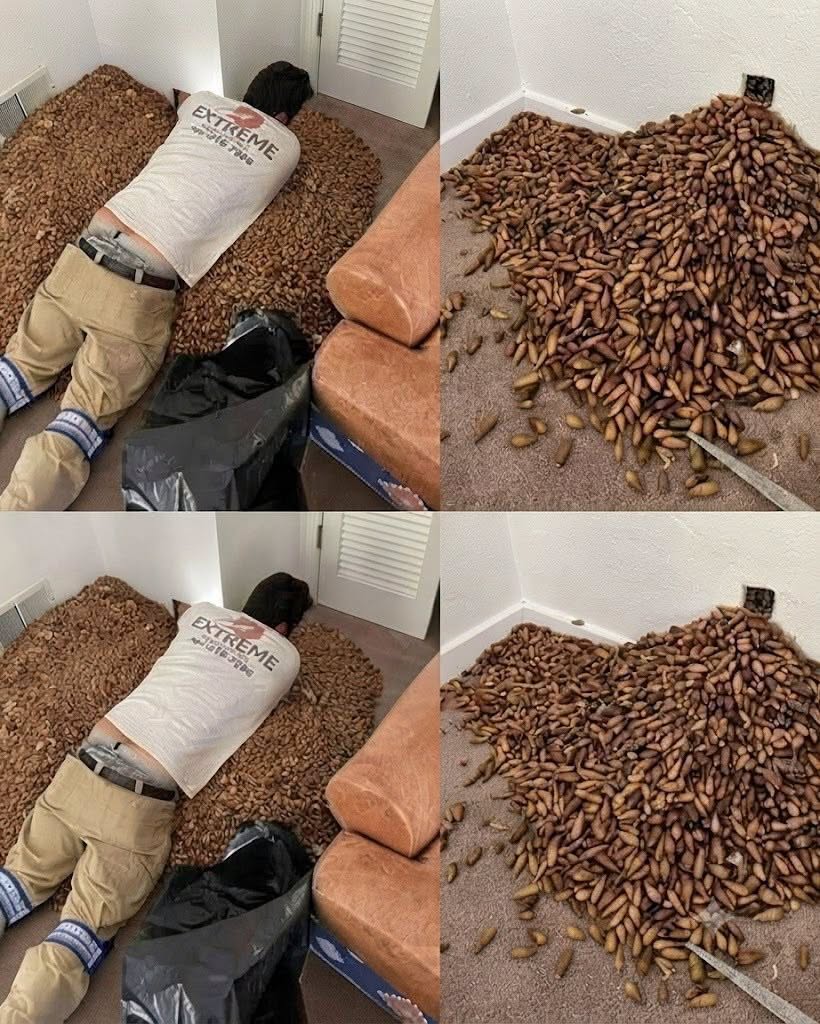
The existing holes in the exterior siding were patched.
The homeowner also planned to add new vinyl siding, which would make the previous storage locations less accessible.
This approach addressed the source of the problem without harming the bird.
Instead of trying to capture or eliminate the woodpecker, the team simply made the house less suitable for storing acorns.
Ideally, the bird would then find another location that was better suited to her natural behavior.
A Reminder That Wildlife Can Adapt to Human Structures
The story is also a fascinating example of how wildlife can interact with human environments.
Animals don't necessarily understand the difference between a natural tree cavity and a hollow space inside a building.
If a location provides shelter, protection, or a convenient place to store food, an animal may take advantage of it.
From the woodpecker's perspective, the house offered something useful:
a series of openings and cavities that could be used for food storage.
The homeowners, of course, saw the situation differently.
What was convenient for the bird was potentially damaging to the building.
This kind of conflict is common wherever human structures overlap with wildlife habitat.
Why the Discovery Was So Hard to Believe
The most fascinating part of this story isn't simply that a woodpecker stored acorns.
It's the scale of what happened.
Seeing one or two acorns around a house wouldn't immediately raise suspicion.
Even finding a few dozen might not seem extraordinary.
But hundreds of pounds is an entirely different story.
The outside of the house didn't necessarily reveal what was happening inside.
That is what made the discovery so surprising.
The wall essentially hid a giant collection of food that had been accumulating over time.
Until Castro opened it, there was no obvious way to appreciate just how much had been stored inside.
