
11. When to call sooner rather than later
You don’t necessarily need a midnight panic, but a few signs should move this up the list. Call a doctor sooner if the bump is changing rapidly over days, is very dark or unevenly colored, bleeds on its own, is painful, is attached to a larger lump under the skin, or is joined by many new lesions in a short time.
Also seek care if it is near the eye, inside the nostril, or on the lip border, because those areas are trickier to treat safely at home. If your daughter has eczema, takes medicines that affect the immune system, or has a history of unusual skin growths, it’s also wise to have a professional look.
12. How contagious it is in a practical, everyday sense
Warts are contagious, but not in the dramatic way folks sometimes fear. Casual presence in the same room is not the issue. Spread happens more through direct skin contact, picking, shaving over the area, or sharing close-contact personal items like razors, washcloths, or makeup tools.
For the next few weeks, it’s sensible for her not to fiddle with it, not to shave over it, and not to share razors, necklaces that rub the same area, or facial tools. Handwashing after touching the spot is a good habit. Those simple steps lower the chance of spreading it to her own skin or someone else’s.
13. Why teenagers often find this especially upsetting
At that age, a 3-millimeter bump can feel the size of a barn. I remember how hard photo days and public performances could feel even when everything was going well. Teenagers live under bright mirrors, bright phone cameras, and brighter self-consciousness than many of us older folks ever did.
So along with the skin advice, I’d offer reassurance. A recital audience notices posture, expression, music, and confidence far more than one tiny neck bump. If it is a filiform wart, it is common, usually treatable, and not a reflection on her health or cleanliness. Calm from a parent goes a long way the night before an event.
14. A sensible plan for the next 24 to 72 hours
For tonight: cleanse gently, leave it alone, avoid harsh treatments, and keep hair, collars, or jewelry from snagging it. For tomorrow: use minimal makeup if needed, don’t pick, and get through the recital first. Afterward, if the lesion still seems spiky and thread-like, schedule a routine appointment with her primary care doctor or a dermatologist within the next few days or weeks.
If you can, take one clear photo tonight in good natural light from about 6 to 8 inches away, then another in a few days. That helps you track whether it is stable or changing. In my kitchen-drawer school of life, a dated photo is often more useful than memory when it comes time to describe “how long it’s been there.”
15. The bottom line
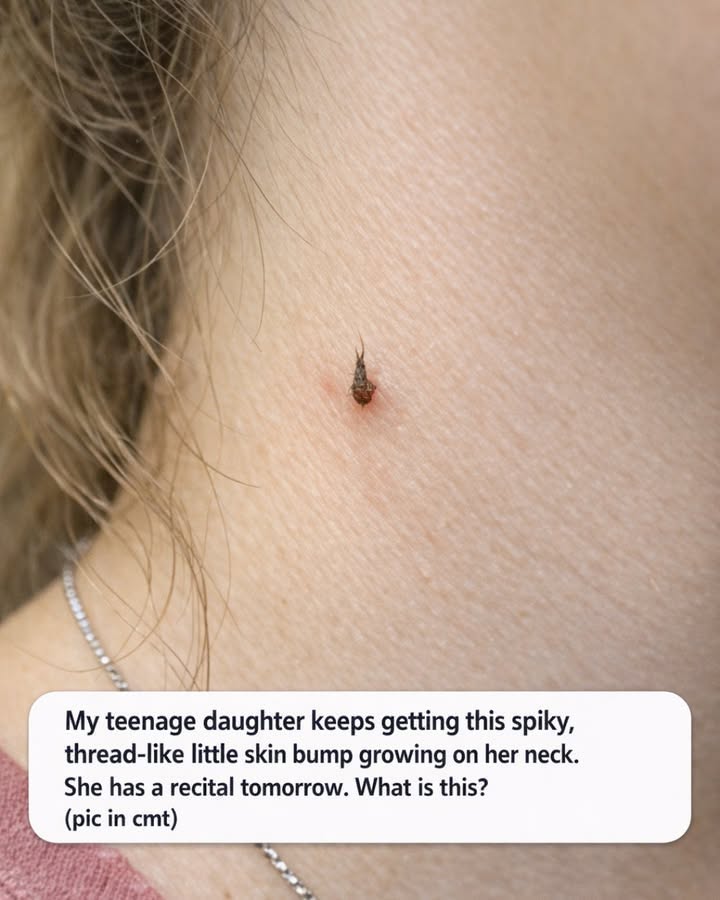
Based on your description—a teenage girl, a small spiky, thread-like bump, growing on the neck—the most likely everyday answer is a filiform wart. It’s usually harmless, commonly mistaken for other little growths, and best left unpicked, uncut, and untreated with harsh products right before an important performance.
If it stays small and otherwise ordinary, a doctor can confirm it and discuss removal options after the recital. If it shows warning signs like pain, spontaneous bleeding, rapid growth, or unusual color, get it checked sooner. But for tonight, I’d choose the gentlest course: breathe, protect the area, let her focus on the music, and sort out the bump in daylight with a steady head.
