
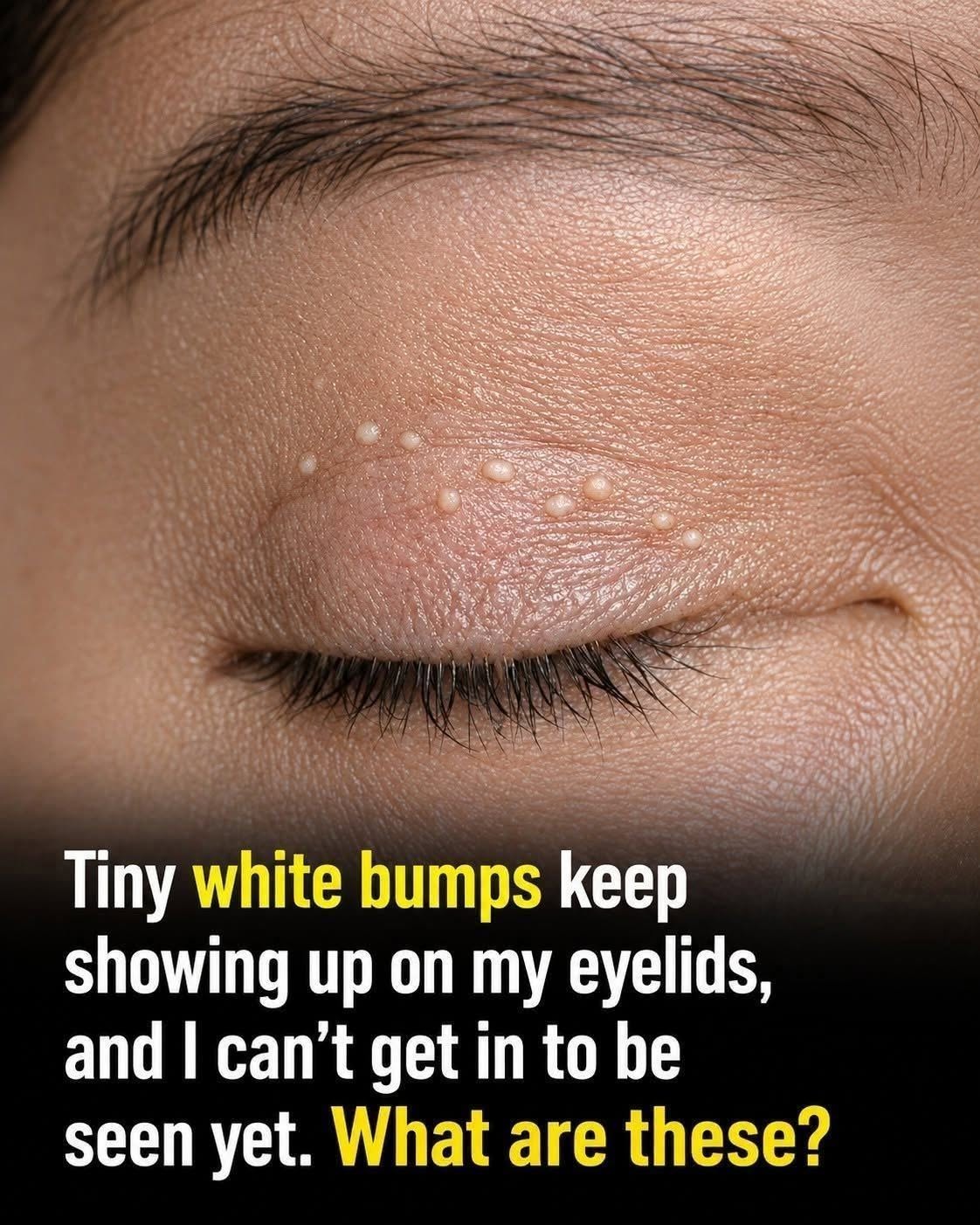
Xanthelasma is different from milia and is generally not something that should be treated at home.
Could Skincare Products Be Contributing?
The skin around the eyes is thin and sensitive. Products that work perfectly well elsewhere on the face may sometimes cause irritation around the eyelids.
Heavy creams, oils, makeup, sunscreen, or occlusive products may contribute to clogged pores or irritation in susceptible individuals.
That does not mean you should stop moisturizing your skin entirely. Instead, consider using products formulated for sensitive skin and avoid applying excessive amounts close to the lash line.
Removing makeup gently and thoroughly at the end of the day can also help maintain healthy eyelid skin.
Don't Scrub Your Eyelids Aggressively
One of the biggest mistakes people make when they notice tiny bumps is trying to scrub them away.
The reasoning seems understandable: if something is trapped beneath the skin, perhaps stronger exfoliation will remove it.
Around the eyes, however, aggressive scrubbing can do more harm than good.
The eyelid skin is delicate. Excessive rubbing can lead to redness, irritation, inflammation, and microscopic skin damage.
If the bumps are actually milia, ordinary scrubbing may not remove them anyway.
Gentle cleansing is usually the better approach.
Should You Pop a White Eyelid Bump?
In general, it is best not to.
Even if a bump looks exactly like a small whitehead, squeezing it can introduce bacteria, cause inflammation, create a wound, or leave a mark.
The risk is particularly important around the eyes.
Trying to puncture a bump with a needle or sharp object is even more dangerous. The area is delicate, and an accidental injury could affect the eyelid or eye itself.
If a bump truly needs removal, a qualified professional can determine what it is and use an appropriate technique.
Can Diet Cause Eyelid Bumps?
It is tempting to blame every skin change on a particular food.
For most tiny eyelid bumps, however, there is no simple food that can be identified as the direct cause.
A balanced diet supports overall skin health, but eliminating individual foods without a clear reason is generally unnecessary.
If someone has xanthelasma or another condition associated with metabolic health, a healthcare professional may recommend appropriate blood tests or dietary changes based on the person's overall health.
What Can You Safely Do at Home?
