
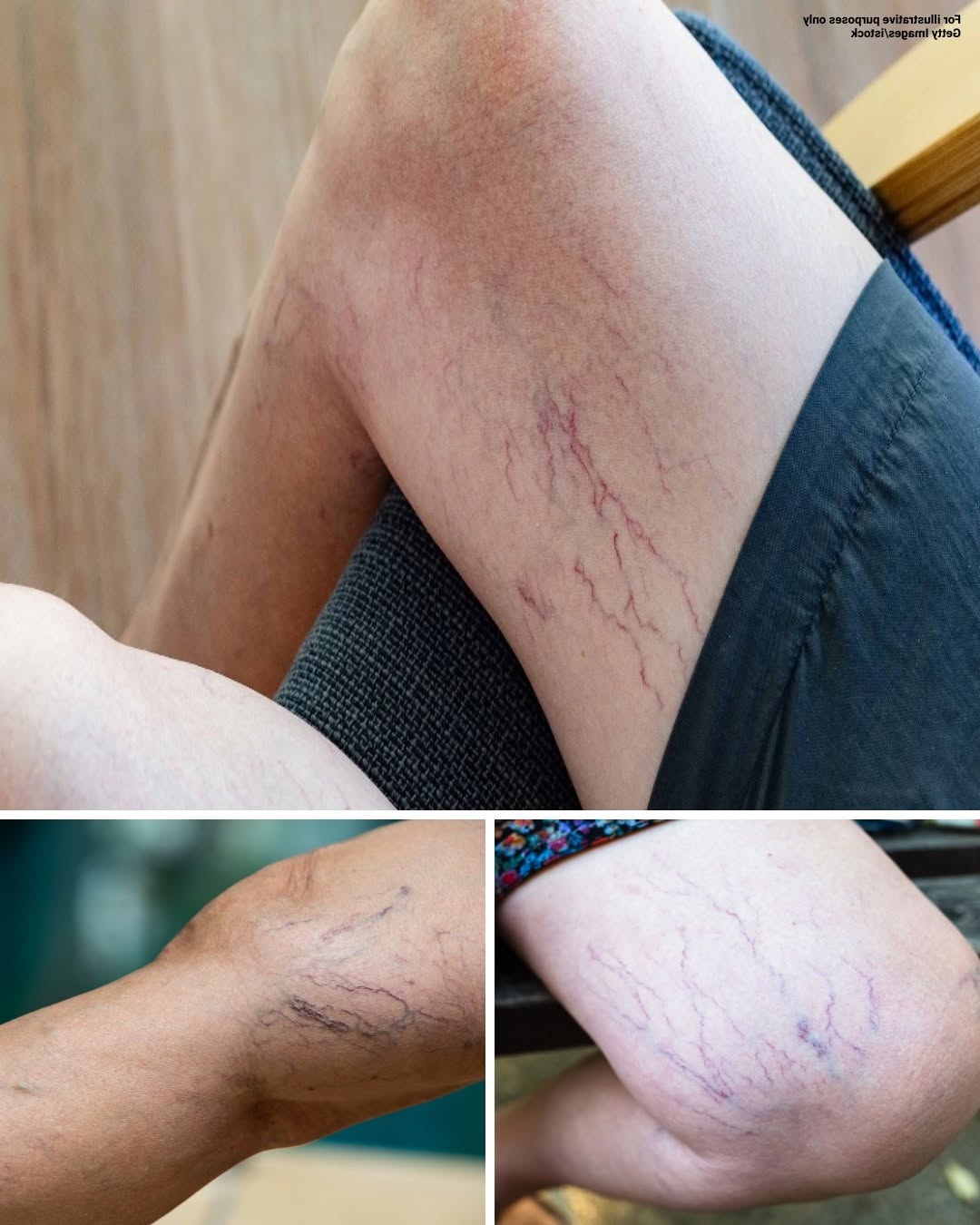
Purple veins may start as a cosmetic issue, but symptoms often progress.
Common symptoms include:
- Aching legs
- Heavy feeling in the legs
- Burning sensation
- Swelling around the ankles
- Muscle cramps
- Nighttime leg pain
- Itching around veins
- Restless legs
- Skin discoloration
If left untreated, symptoms may worsen over time.
When Purple Veins Become Serious
Although spider veins are often harmless, larger varicose veins may lead to complications such as:
Chronic Venous Insufficiency
The veins struggle to return blood efficiently.
This causes swelling, discomfort, and long-term circulation problems.
Blood Clots
In some cases, damaged veins increase the risk of clot formation.
Sudden swelling, warmth, redness, or severe pain should always be evaluated promptly by a healthcare professional.
Skin Change
Poor circulation may lead to:
- Brown skin discoloration
- Thickened skin
- Dry patches
- Venous eczema
Venous Leg Ulcers
Severe vein disease can eventually cause slow-healing wounds near the ankles.
These ulcers require professional medical treatment.
How Doctors Diagnose Vein Problems
Diagnosis usually includes:
- Physical examination
- Medical history
- Duplex ultrasound
Ultrasound allows healthcare providers to evaluate blood flow and identify damaged valves.
Treatment Options
Treatment depends on symptom severity and the underlying cause.
Compression Stockings
Medical-grade compression stockings improve circulation by gently squeezing the legs.
Benefits include:
- Reduced swelling
- Less discomfort
- Better blood flow
- Prevention of worsening symptoms
Lifestyle Changes
Simple daily habits often make a significant difference.
Recommended lifestyle changes include:
- Walking at least 30 minutes daily
- Losing excess weight
- Elevating your legs
- Avoiding prolonged sitting
- Taking movement breaks every hour
Exercise
Exercises that strengthen calf muscles improve blood circulation naturally.
Excellent choices include:
- Walking
- Swimming
- Cycling
- Yoga
- Low-impact aerobics
Sclerotherapy
For spider veins, doctors may inject a special solution that causes damaged veins to collapse and gradually disappear.
This minimally invasive procedure is widely used for cosmetic improvement.
Laser Therapy
Laser treatment uses focused light energy to close small surface veins without surgery.
Recovery is usually quick.
Endovenous Laser Ablation
For larger varicose veins, minimally invasive laser procedures can seal damaged veins from the inside.
Patients often return to normal activities within a few days.
Surgical Treatment
Severe cases may require removal or closure of damaged veins.
Modern surgical techniques are generally much less invasive than traditional vein surgery.
Can Purple Veins Be Prevented?
While genetics cannot be changed, many risk factors can be reduced.
Helpful prevention tips include:
- Stay physically active
- Maintain a healthy weight
- Wear supportive footwear
- Avoid smoking
- Drink enough water
- Eat a fiber-rich diet
- Reduce excess salt intake
- Avoid crossing your legs for long periods
- Stretch during long flights or road trips
- Elevate your legs after work
Foods That Support Healthy Veins
The Article isn’t over yet… Click “Next” to continue reading and discover what happens next.
